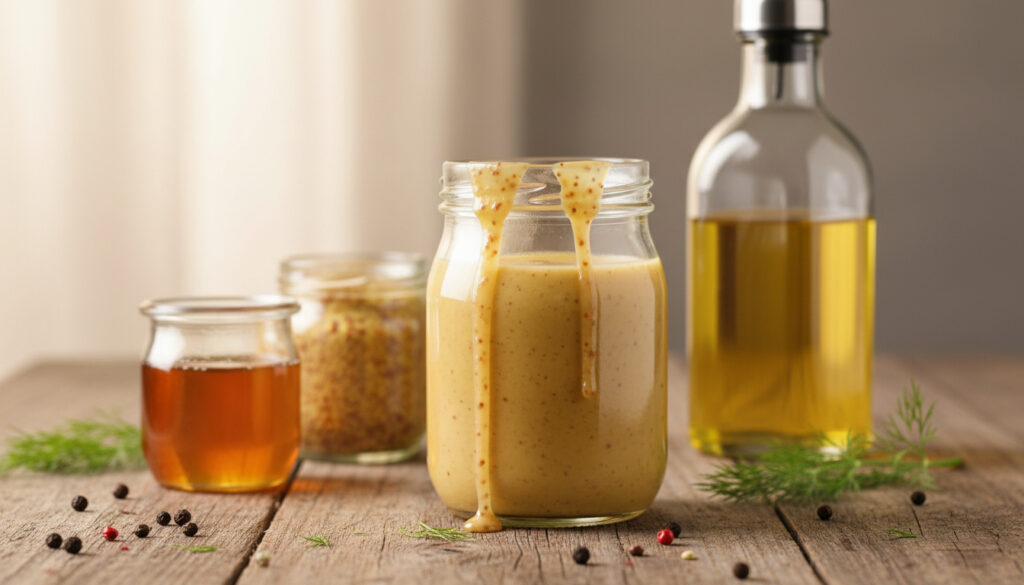
Honey Mustard Dressing – Easy 5-Minute Homemade Guide
Honey mustard dressing balances sweet and tangy flavors in a versatile emulsion that serves as both salad topping and dipping sauce. Traditional versions combine honey with mustard and oil or mayonnaise, though contemporary variations increasingly substitute maple syrup or agave nectar to create plant-based alternatives.
Preparation requires minimal time and equipment. Most recipes finish in under five minutes using basic pantry staples. The condiment adapts easily to dietary preferences, with oil-free and vegan formulations maintaining the signature flavor profile while reducing calories.
Understanding proper storage techniques and nutritional content helps maximize both safety and health benefits. Homemade versions typically outperform commercial alternatives in freshness and ingredient control.
How Do You Make Honey Mustard Dressing?
- Versatility: Functions as salad dressing, dip, marinade, or sandwich spread
- Speed: Most recipes require only whisking or shaking ingredients
- Customization: Adjust sweetness or tang by varying syrup-to-mustard ratios
- Dietary flexibility: Easy to make vegan, oil-free, or gluten-free
- Storage: Requires refrigeration; freezing extends life to 3 months
- Health advantage: Homemade versions avoid xanthan gum and preservatives found in commercial bottles
| Nutrient | Per 2 tbsp Homemade | Per 2 tbsp Store-Bought |
|---|---|---|
| Calories | 50-120 | 130-180 |
| Total Fat | 0-11g | 12-16g |
| Sugar | 4-8g | 6-10g |
| Sodium | 150-300mg | 200-350mg |
| Saturated Fat | 0-1g | 1-2g |
What is honey mustard dressing made of?
The foundation combines sweetener and mustard. Traditional recipes use honey, while vegan versions rely on maple syrup or agave nectar. Dijon mustard provides sharpness, though yellow or brown mustard work for different intensity levels.
Additional components vary by texture preference. Oil-based recipes use olive or avocado oil for emulsification. Creamy versions incorporate vegan mayonnaise or yogurt. Acidic elements like apple cider vinegar or lemon juice balance the sweetness.
Honey mustard dressing recipe without mayo
Oil-free preparations eliminate both mayonnaise and oil. Shane & Simple offers a two-ingredient base combining ¼ cup yellow or Dijon mustard with 2 tablespoons maple syrup. This version contains approximately 50 calories per serving and zero fat.
For enhanced complexity, add ¼ teaspoon garlic powder or a splash of vinegar. The mixture requires only whisking. Chill for one hour before serving to allow flavors to meld.
Vegan honey mustard dressing recipe
Plant-based formulations replace honey with maple syrup, agave, or commercial vegan honey alternatives. Plant Based Jess recommends combining ⅓ cup vegan mayonnaise, 2 tablespoons Dijon or yellow mustard, 2 tablespoons maple syrup, and one minced garlic clove.
For a richer texture, Yum Vegan Lunch Ideas suggests using ⅓ cup olive oil with 2 tablespoons apple cider vinegar and 2 tablespoons Dijon mustard. Whisk vigorously to create an emulsified consistency that adheres to greens.
Thin dressing with water for salad applications; keep it thick for dipping. The No Sweat Vegan method suggests adding water one teaspoon at a time until reaching desired consistency.
How Long Does Honey Mustard Dressing Last?
Refrigerated storage in an airtight container preserves homemade dressing for 1-2 weeks. Creamy versions containing vegan mayonnaise typically last longer than oil-based vinaigrettes. Always store below 40°F (4°C).
Can you freeze honey mustard dressing?
Freezing extends viability to three months. Pour prepared dressing into ice cube trays, creating 1-2 tablespoon portions. Freeze solid, then transfer cubes to freezer bags. Thaw individual portions overnight in the refrigerator.
Shake or whisk after thawing, as separation may occur. This method works particularly well for oil-free versions, which demonstrate stability without separation according to recipe developers.
Discard dressing if mold appears, colors separate permanently, or sour odors develop. Homemade versions lack commercial preservatives, making visual and olfactory checks essential.
Is Honey Mustard Dressing Healthy?
Nutritional value depends entirely on preparation method. Oil-free vegan versions contain approximately 50 calories per 2-tablespoon serving with zero fat. Traditional oil-based recipes range from 100-120 calories, with fat content varying by oil quantity.
Honey mustard dressing calories per serving
Caloric density stems primarily from oil or mayonnaise content. My Quiet Kitchen notes that fat-free versions derive calories solely from carbohydrates in the sweetener, typically 10-15 grams per serving.
Health benefits include whole-food ingredients devoid of refined sugars in many recipes. Mustard seeds provide antioxidants and trace minerals. Garlic additions offer antimicrobial properties. Compared to ranch or blue cheese alternatives, honey mustard typically contains fewer calories and less saturated fat.
Most vegan versions are naturally gluten-free and dairy-free. Plant Based Jess confirms these formulations support vegan, vegetarian, and allergen-restricted diets without sacrificing flavor.
What Can You Use Honey Mustard Dressing For?
Applications extend beyond leafy greens. The emulsion serves as a multipurpose condiment across meal categories.
Best store-bought honey mustard dressing
While specific brands vary by region, homemade versions generally surpass commercial options in freshness and ingredient transparency. Store-bought varieties often contain xanthan gum, artificial preservatives, and excess sodium. For those purchasing pre-made options, check labels for minimal ingredient lists and avoid high-fructose corn syrup.
Dressing functions effectively as a marinade for tofu and vegetables when diluted with water. It coats proteins evenly, caramelizing slightly during baking. As a dip, it accompanies roasted potatoes, raw vegetables, and breaded items. Sandwich applications include wraps and cold cuts, similar to how Ready Made Meals – Healthiest UK Supermarket Picks incorporate diverse condiment profiles.
How Has Honey Mustard Dressing Evolved?
- Medieval Origins: Mustard and honey combinations appear in ancient culinary texts as medicinal and flavoring agents.
- 19th Century: French cuisine refines mustard-based sauces, establishing emulsification techniques still used today.
- 1980s American Popularization: Fast food chains introduce honey mustard as a dipping sauce, driving mass-market recognition.
- 2000s Health Consciousness: Recipes shift toward oil-free and reduced-sugar variations.
- 2010s Plant-Based Adaptation: Vegan formulations using maple syrup and agave emerge, matching traditional flavor profiles without animal products.
- Present Day: Customization trends emphasize single-serving preparations and freezer-friendly storage methods.
What Do We Know for Certain About Honey Mustard Dressing?
Established Facts
- Requires refrigeration after preparation
- Contains 2-5 ingredients in basic forms
- Shelf life ranges 7-14 days when refrigerated
- Caloric content varies 50-150% based on oil inclusion
- Maple syrup substitutes measure equally for honey in vegan versions
Unclear Variables
- Exact fermentation effects of long-term storage
- Optimal vinegar-to-sweetener ratios for specific mustard varieties
- Nutritional degradation rates during freezing
- Standardized serving sizes across commercial brands
Where Did Honey Mustard Dressing Originate?
The pairing of honey and mustard traces to ancient European culinary traditions. Mustard seeds, cultivated for millennia, merged with honey—a natural preservative and sweetener—in medieval kitchens. These combinations served both gustatory and medicinal purposes.
Modern American honey mustard dressing emerged from fast-food culture in the late 20th century, evolving from simple dipping sauces into complex salad emulsions. Contemporary iterations reflect dietary diversification, with vegan versions now representing significant recipe development. The shift from honey to plant syrups maintains cultural continuity while accommodating ethical and health preferences.
What Do Culinary Sources Say About Honey Mustard Dressing?
“The balance between Dijon’s sharpness and maple syrup’s caramel notes creates a more complex flavor profile than traditional honey versions.”
“Homemade tastes better and is customizable versus fancy bottles. You control the tang and the sweet.”
— Shane & Simple
“Using a blend of Dijon and yellow mustard provides both the sharp bite and the familiar yellow-mustard comfort.”
What Should You Remember About Honey Mustard Dressing?
Honey mustard dressing offers a quick, customizable condiment solution adaptable to vegan, oil-free, and traditional diets. Five-minute preparation yields fresher results than commercial alternatives. Proper refrigeration maintains safety for 1-2 weeks, while freezing preserves the emulsion for extended use. Whether dressing greens or marinating proteins, the sweet-tangy balance complements diverse dishes. For automotive enthusiasts seeking different technical specifications, see Toyota GR GT – Prototype Specs, GT3 Details and Timeline.
Common Questions About Honey Mustard Dressing
Can you freeze honey mustard dressing?
Yes. Pour into ice cube trays to create 1-2 tablespoon portions. Freeze solid, then transfer to freezer bags. Thaw overnight in the refrigerator and shake before using.
What is the best store-bought honey mustard dressing?
No specific brands rank definitively superior. Look for options with minimal ingredients and no xanthan gum or high-fructose corn syrup. Homemade versions typically offer better freshness and customization.
How do you make honey mustard dressing without mayo?
Combine ¼ cup mustard with 2 tablespoons maple syrup or honey. Add vinegar or garlic powder for complexity. Whisk until smooth. This oil-free version contains approximately 50 calories per serving.
Is honey mustard dressing gluten-free?
Most recipes are naturally gluten-free, but verify mustard brands, as some processing facilities handle wheat. Vegan versions using pure maple syrup and certified gluten-free mustard ensure safety for celiac diets.
How many calories are in 2 tablespoons of honey mustard dressing?
Calories range from 50 (oil-free vegan) to 120 (oil-based). Store-bought versions average 130-180 calories due to added sugars and stabilizers.
Can I use honey mustard dressing as a marinade?
Yes. Thin the dressing with water to coat tofu, tempeh, or vegetables evenly. The acids help tenderize proteins while the sugars caramelize during cooking.
What variations work well with the basic recipe?
Add BBQ sauce for smoky depth, or substitute date paste or brown rice syrup for different sweetener profiles. Spice additions like cayenne or smoked paprika alter the heat level.
More related posts
 How Old Is Paul McCartney – Age, Family, Net Worth 2025
 Women’s Jackets in Ireland: Casual, Dressy, Hooded & Sale
 Abhishek Sharma: Biography, Age, Career Records, Personal Life
 Violet Myers: Age, Net Worth, Children & Career (2026)
 Kirsten Dunst: Age, Children, Career, and Mental Health
 Greek Gods: Complete Guide to the Olympians, Powers, and Myths
 Margot Robbie Barbie: Salary, Casting & Controversies
 10 Play.com.au/Activate – Step-by-Step TV Activation Guide