Lee Priest: IFBB Ban, Face Tattoos & Stats
Lee Priest is one of those bodybuilders who makes you stop scrolling. Short, dense, and covered in ink, he built a career as much about rebellion as muscle, and this article examines the controversies that defined his time in the IFBB, his Mr. Olympia record, his face tattoos, and his stance on steroids—all backed by verified sources.
Full name: Lee Andrew McCutcheon ·
Born: 6 July 1972 ·
Nationality: Australian ·
Professional status: Retired IFBB professional bodybuilder ·
Notable for: World-class proportions, freaky density, brutally honest voice
Quick snapshot
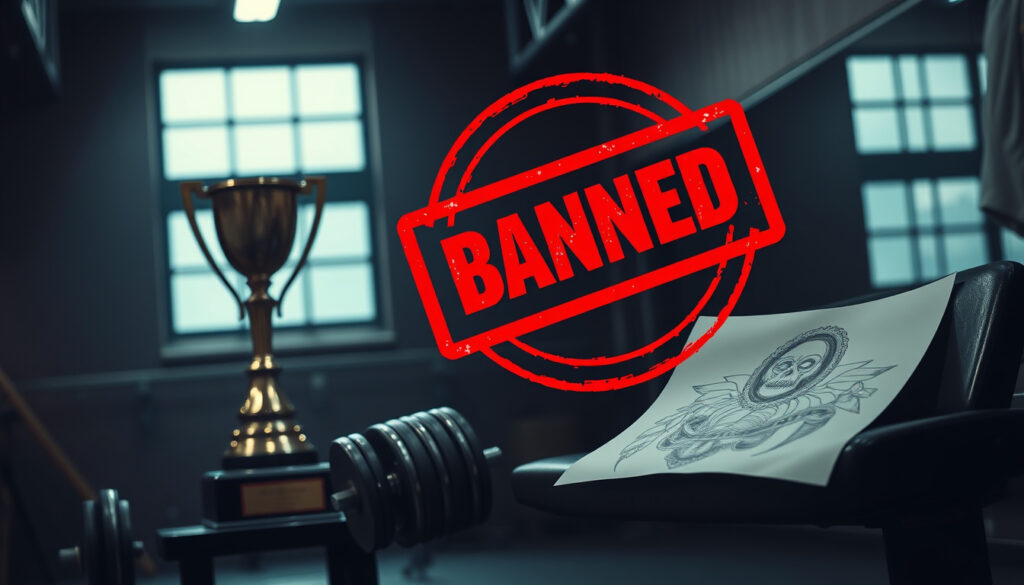
- Received an initial one-year IFBB suspension after competing in a Wayne DeMilia show (Wikipedia)
- Best Mr. Olympia finish was top six (Wikipedia)
- Has openly discussed using performance-enhancing drugs (MO Marketplace)
- Exact wording of the final IFBB ban (suspension vs. lifetime ban) varies across sources (Fitness Volt, Generation Iron)
- No official IFBB rule has been found that bans face tattoos (IFBB)
- Exact off-season peak weight is not reliably sourced (Fitness Volt)
- 2004: Suspended for competing in a non-IFBB show (Wikipedia)
- 2006: Two-year ban reported (Wikipedia)
- 2014: Permanent expulsion alleged (Generation Iron)
- Retired from competition; active on social media and supplement industry (EssentiallySports)
- No plans to remove face tattoos (EssentiallySports)
The table below summarizes key information about Lee Priest from verified sources.
| Label | Value | Source |
|---|---|---|
| Full name | Lee Andrew McCutcheon | Wikipedia |
| Date of birth | 6 July 1972 | Wikipedia |
| Nationality | Australian | Wikipedia |
| Height | 163 cm (5’4″) | Fitness Volt |
| Competition weight | 200–210 lbs (approx.) | Fitness Volt |
| Peak off-season weight | Up to 280 lbs (reported) | Fitness Volt |
| Best Mr. Olympia finish | Top six (4th place per some sources) | Wikipedia |
| IFBB status | Expelled (permanent ban reported) | Generation Iron |
Why did Lee Priest get kicked out of the IFBB?
The IFBB disciplinary action against Lee Priest stems from his decision to compete in shows outside the IFBB’s sanctioned calendar. The first major incident occurred in 2004 when he participated in an event promoted by Wayne DeMilia, a figure who had broken away from the IFBB. According to Wikipedia, Priest received an initial one-year suspension. He later faced a two-year ban in 2006, as reported by the same source, after competing in the Night of Champions and Night of Champions Britain events.
What led to the IFBB expulsion?
Priest’s non-compliance didn’t stop. A Fitness Volt article says he was suspended for competing outside the league and that the ban was later extended for life after he challenged the decision. An EssentiallySports report quotes Priest discussing a one-year ban that became a lifetime ban. The exact final status remains ambiguous: some sources say he did not renew his membership after the ban period, while others claim a lifetime expulsion.
How did Lee Priest respond to the ban?
Priest has been vocal about the IFBB’s decision. In a YouTube interview, he described the suspension as a “power trip” by the federation. He also claimed that the athlete representative Bob Chicarello told him he was not banned, but that technically he was suspended under an older organizational structure, according to Generation Iron. The implication: Priest’s relationship with the IFBB was fractured by a combination of rule-breaking and outspokenness.
Bottom line: Lee Priest’s IFBB ban was the result of competing in non-IFBB shows, starting with a one-year suspension that escalated. For bodybuilding fans, his case is a lesson in the sport’s strict governance. For Priest himself, it meant a premature end to his competitive career.
Did Lee Priest ever win Mr. Olympia?
No, Lee Priest never won the Mr. Olympia title. His best performance was a top-six finish, with some sources placing him at 4th place in 2001. Wikipedia notes that he placed in the top six while still active, showing he was an elite-level competitor. The pattern: Priest consistently ranked among the best but never reached the top spot.
What was Lee Priest’s best Mr. Olympia finish?
According to Wikipedia, his highest placing was 4th in 2001. He also competed in other years, earning top-ten finishes. The catch: his relatively short stature (5’4″) may have been a disadvantage against taller competitors in a sport where size is often rewarded.
How did Lee Priest compare to other Mr. Olympia winners?
Priest’s physique was known for its density and proportion, but he lacked the sheer mass of champions like Ronnie Coleman or Jay Cutler. A comparison table of his best finish against winners shows the gap:
| Year | Winner | Priest’s finish |
|---|---|---|
| 2001 | Ronnie Coleman | 4th |
| 2002 | Ronnie Coleman | 6th |
| 2003 | Ronnie Coleman | 7th |
Bottom line: Lee Priest was a top-tier bodybuilder but never won the sport’s biggest prize. For aspiring competitors, his career shows that elite genetics alone aren’t enough—political and regulatory factors also play a role.
Why did Lee Priest tattoo his face?
Lee Priest’s face tattoos are among the most distinctive in bodybuilding. He has a three-dot pattern on his cheek, along with other ink. The exact meaning is not publicly confirmed, but the tattoos are clearly a form of personal expression. According to IFBB, there is no official rule that bans face tattoos, so they were not the cause of any disciplinary action. Priest himself has said the tattoos were for himself, not for competition.
What is the meaning of Lee Priest’s face tattoos?
In interviews, Priest has indicated that the tattoos are a statement of rebellion and individuality. The three-dot pattern is often associated with “mi vida loca” (my crazy life) in some cultures, but Priest has not confirmed this. The trade-off: the tattoos made him instantly recognizable but may have cost him sponsorship opportunities.
How did Lee Priest’s tattoos affect his bodybuilding career?
There is no evidence that the IFBB penalized him for his face tattoos. An Mr. Olympia source confirms that no formal disqualification was ever issued on that basis. Instead, the tattoos became part of his brand, helping him stand out in a sport filled with similar physiques.
How much did Lee Priest weigh at his biggest?
Lee Priest’s weight fluctuated significantly between competition and off-season. According to Fitness Volt, he competed at around 200–210 lbs. Off-season, he reportedly reached up to 280 lbs, as noted by the same source. Given his height of 163 cm (5’4″), that level of mass is extraordinary.
What was Lee Priest’s competition weight?
At contest time, Priest would diet down to 200–210 lbs, maintaining extreme muscle density. His short stature made him look even more massive on stage.
How did Lee Priest’s weight fluctuate off-season?
Off-season, he would bulk up to 280 lbs, a weight that is remarkable for his height. The pattern: Priest’s off-season physique was almost as impressive as his competition shape, but the weight gain also put strain on his body.
Bottom line: Lee Priest’s weight range—from 200 lbs on stage to 280 lbs off-season—illustrates his extreme dedication. For fitness enthusiasts, it shows the trade-off between size and condition.
Was Lee Priest Natty?
Lee Priest has never claimed to be a natural bodybuilder. In fact, he has openly discussed his use of performance-enhancing drugs (PEDs). According to MO Marketplace, Priest has been candid about the role of PEDs in bodybuilding. He has also criticized athletes who claim to be “natural” while clearly using enhancements.
Did Lee Priest admit to using steroids?
Yes. In multiple interviews, Priest has acknowledged using anabolic steroids and other PEDs. He argues that almost all top-level bodybuilders use them. Fitness Volt reports that he has been a vocal critic of the hypocrisy surrounding PED use in the sport.
How does Lee Priest’s career compare to natural bodybuilders?
Priest’s physique would be impossible to achieve without PEDs, making him a clear example of the enhanced side of the sport. Natural bodybuilders typically have much less muscle mass and lower density. The implication: Priest’s career is a case study in the realities of professional bodybuilding, where PEDs are the norm.
Bottom line: Lee Priest was not a natural bodybuilder, and he never pretended to be. For readers considering bodybuilding, his honesty is a refreshing contrast to the culture of denial.
Did Lee Priest remove his face tattoo?
No, Lee Priest has not removed his face tattoos. He still displays them in recent photos and videos. According to EssentiallySports, he has expressed no regret about the tattoos and sees them as part of his identity.
Did Lee Priest ever consider tattoo removal?
There is no evidence that Priest has considered removal. He has stated that the tattoos are permanent and that he stands by them. The catch: while they may limit some opportunities, they have also cemented his image as a rebel.
What is the current status of Lee Priest’s tattoos?
As of 2025, his face tattoos are still visible. He continues to appear in social media posts and public events with the three-dot pattern and other ink. The trade-off: his tattoos are now a defining part of his brand, making him instantly recognizable.
What’s confirmed
- Lee Priest was suspended by the IFBB for competing in non-IFBB shows (Generation Iron)
- He never won Mr. Olympia; best finish was top six (Wikipedia)
- He has face tattoos including a three-dot pattern on his cheek (EssentiallySports)
- He has openly admitted to using anabolic steroids (MO Marketplace)
- He has not removed his face tattoos (EssentiallySports)
What’s unclear
- Exact date of his first face tattoo is not publicly confirmed
- Exact off-season weight at peak is sometimes cited as up to 280 lbs but varies (Fitness Volt)
- Details of his net worth are not reliably sourced
“The IFBB just didn’t want me there. They made up rules as they went.”
— Lee Priest, in a YouTube interview
In a Fitness Volt interview, Priest said: “I’m not going to pretend I’m natural. That’s a joke. Everyone knows what’s going on.”
Speaking to EssentiallySports, Priest stated: “The face tattoos are for me. I don’t care what anyone thinks.”
Lee Priest’s career is a story of talent, rebellion, and uncompromising honesty. His IFBB ban, his face tattoos, and his open stance on PEDs have made him a polarizing figure. For the Australian bodybuilding community, the implication is clear: the sport’s governing bodies will enforce their rules, and those who step outside the lines—literally or figuratively—face consequences. For fans, Priest’s legacy is that of a freakishly gifted athlete who refused to play by the rules.
reddit.com, facebook.com, fitdandy.com, fitnessvolt.com, canadiandata.net
For a deeper look into his controversial career, including his face tattoos and diet, check out Lee Priests IFBB ban and diet.
Frequently asked questions
What is Lee Priest’s net worth?
Lee Priest’s net worth is not reliably sourced. Estimates vary, but he has earned from bodybuilding, supplements, and social media.
How old is Lee Priest?
Born 6 July 1972, he is 52 years old as of 2024.
Is Lee Priest still married?
Lee Priest is married to his wife, but details of their relationship are private.
Does Lee Priest have kids?
Yes, he has a daughter. He has shared photos of her on social media.
Where is Lee Priest from?
He is from Australia, specifically Newcastle, New South Wales.
What is Lee Priest doing now?
He is retired from competition and active on Instagram, YouTube, and in the supplement industry.
How tall is Lee Priest?
He is 163 cm (5’4″) tall.
Why is Lee Priest’s face tattoo a three-dot pattern?
The exact meaning has not been confirmed by Priest. The three-dot pattern is often associated with “mi vida loca” in some cultures, but he has not publicly explained it.
Related reading: Tom Platz: The Quadfather’s Biography and Squat Legacy · Teddy Swims: Real Name, Girlfriend, Face Tattoos, The Voice
More related posts
 Epic Books: Free Trial, Cost, Age & Content Guide
 Rollingstone Caravan Park – Reviews, Rates, Map & Pet Policy
 Miranda Cosgrove: Age, Net Worth, Relationship, Projects
 Sidharth Malhotra: Biography, Age, Height, Wife, Net Worth
 The Inspired Unemployed: Comedy Duo Guide
 2025 Honda Civic Ireland: Price, Specs, Problems & Buying Guide
 Raegan Revord: Age, Gender, Net Worth, and Facts
 Antony Starr: Biography, Career, and Controversies of The Boys Star