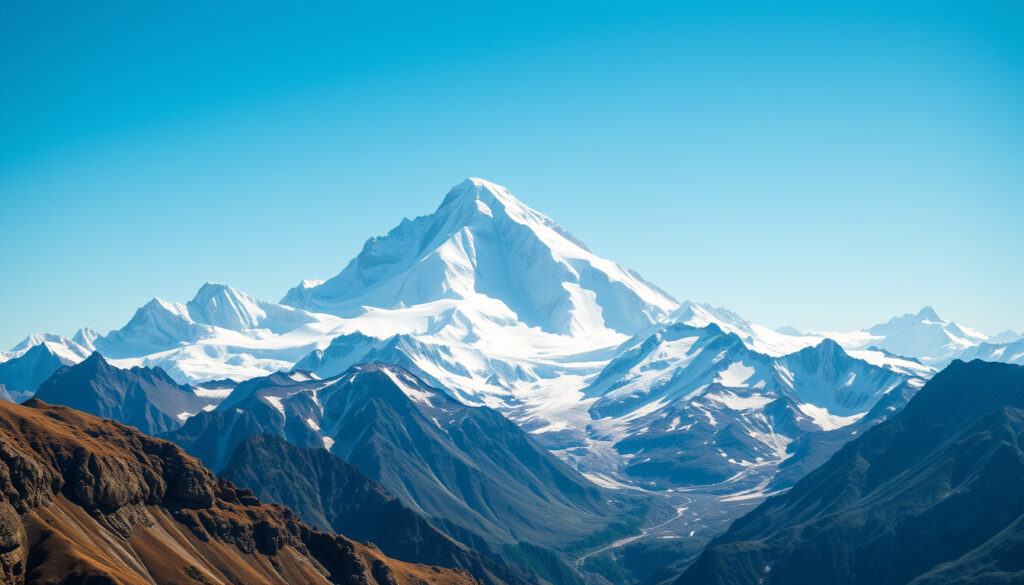
Mont Blanc: Location, Climbing, and Essential Facts
There’s a reason people planning a European mountain trip keep coming back to the same question: is Mont Blanc the one to climb? Standing as the Alps’ tallest peak, it pulls in both seasoned alpinists and first-timers who want to test their limits against a legendary summit.
Elevation: 4,808.73 m (15,777 ft) · Location: French-Italian border, Alps · First ascent: 8 August 1786 · First ascensionists: Jacques Balmat and Dr. Michel-Gabriel Paccard · Prominence: 4,696 m (15,407 ft) — 2nd most prominent in Europe · Closest city: Chamonix, France
Quick snapshot
- French-Italian border (Britannica)
- Summit in France (Chamonix tourism site)
- Closest city: Chamonix (Britannica)
- 4,808.73 m (15,777 ft) — highest in the Alps (Chamonix tourism site)
- 2nd most prominent in Europe at 4,696 m (Chamonix tourism site)
- Summit elevation varies slightly year-to-year (Chamonix.net)
- First ascent: 8 August 1786 (Mountain Madness)
- Technical mountaineering skills required (Mountain Madness)
- Guided trips recommended for beginners (Mountain Madness)
- Known as the “roof of Europe”
- Iconic mountaineering goal
- Year-round tourism in Chamonix
Six key facts about Mont Blanc, one pattern: geographical and climbing data come from official sources, but elevation figures shift over time — and the difficulty assessment depends more on the route than the mountain itself.
| Fact | Value | Source |
|---|---|---|
| Elevation | 4,808.73 m (15,777 ft) | 2023 measurement |
| 2013 measurement | 4,810.06 m | Chamonix.net |
| Location | French-Italian border, Alps | Britannica |
| First ascent date | 8 August 1786 | Historical records |
| First ascensionists | Jacques Balmat and Dr. Michel-Gabriel Paccard | Mountaineering history |
| Prominence | 4,696 m (15,407 ft) | 2nd most prominent in Europe |
| Closest city | Chamonix, France (1,037 m elevation) | Britannica |
| Chamonix altitude (Alpine Ascents) | 1,035 m (3,395 ft) | Alpine Ascents |
| Flégère cable car top | 2,400 m | Alpine Ascents |
Is Mont Blanc in France or Switzerland?
Where exactly is Mont Blanc located?
Mont Blanc sits on the French-Italian border in the Alps, with the summit itself lying within French territory. The mountain is not in Switzerland, though the Mont Blanc massif extends into the Swiss canton of Valais at its northern edge. The closest major town is Chamonix-Mont-Blanc (Britannica), a French commune at 1,037 meters elevation that serves as the base for nearly all guided ascents.
Does Mont Blanc border Italy?
Yes — the French-Italian border runs along the summit ridge. The Italian side of the mountain, accessible from the Aosta Valley, offers alternative climbing routes and the famous Skyway Monte Bianco cable car. However, the summit itself is recognized as being in France under the 1860 Treaty of Turin.
For climbers planning logistics, the border location means permits, access routes, and hut reservations cross two countries. First-timers typically start from the French side because Chamonix offers the densest network of guides, gear rentals, and mountain huts — the Chamonix tourism site calls it “the cradle of mountaineering.”
The implication for anyone planning a trip: choose your starting country based on route preference, not border confusion. France handles the vast majority of commercial climbs, but Italy has quieter approaches if you want fewer crowds on the lower sections.
Why is Mont Blanc so famous?
What makes Mont Blanc the ‘roof of Europe’?
At 4,808.73 meters, Mont Blanc is the highest mountain in the Alps and the highest peak in Western Europe. Its prominence — 4,696 meters — ranks it second only to Mount Elbrus in Europe, meaning it rises dramatically from the surrounding terrain rather than being part of a high plateau. This vertical relief is what makes it visible from Geneva, Lyon, and Turin on clear days.
The mountain has drawn climbers since the first recorded ascent on 8 August 1786 by Jacques Balmat and Dr. Michel-Gabriel Paccard (Chamonix tourism site). That ascent is widely considered the birth of modern mountaineering.
“Mont Blanc is a high-altitude alpine expedition suitable for beginner to intermediate climbers when properly prepared.”
— Mountain Madness
What is the history of Mont Blanc ascents?
- 1760: Horace-Bénédict de Saussure offers a reward for the first ascent
- 1786: Balmat and Paccard reach the summit
- 1808: Marie Paradis becomes the first woman to summit
- 1893: The first winter ascent is completed
These milestones cemented Mont Blanc as a bucket-list climb for serious mountaineers and casual adventurers alike. Its status as an iconic goal means guides, gear shops, and training programs in Chamonix are built around preparing climbers who have never done a high-altitude ascent before.
Mont Blanc’s fame is not just historical — it functions as an entry point to high-altitude alpinism for thousands of climbers every year. The mountain’s accessibility from Chamonix, combined with its moderate altitude by Himalayan standards, makes it the most attempted 4,000-meter peak in the world.
Is it hard to climb Mont Blanc?
What are the main climbing routes?
Mont Blanc has multiple routes, but the standard ascent follows the Goûter Route (also called the Voie Royale). It is a mixed alpine climb that crosses glaciers, a steep couloir, and a rocky ridge — not a pure rock climb or a simple walk-up. Route difficulty varies significantly; Adventure Base notes that guide companies assess difficulty by specific route rather than giving the mountain a single rating.
- Goûter Route: The most popular, with hut stays at Tête Rousse and Goûter
- Trois Monts Route: A more challenging traverse from the Italian side
- Miracle Route: A direct line on the north face, climbed only by experts
What skills and equipment are required?
Climbing Mont Blanc requires competence with crampons, ice axe, and rope management on glaciers. Mountain Madness describes it as a “high-altitude alpine expedition” suitable for beginner to intermediate climbers who are properly prepared — but that preparation includes prior experience with basic mountaineering techniques or a training course.
Minimum gear list:
- Mountaineering boots (B2 or B3 rated)
- Crampons and ice axe
- Harness, carabiners, and slings
- Helmet (mandatory for the couloir section)
- Warm layers and waterproof shell
- Headlamp and spare batteries
What is the 2pm rule?
The “2pm rule” is a safety guideline followed by most guided parties: you must be descending from the summit by 2:00 p.m. at the latest. This avoids being caught on exposed ridges during afternoon thunderstorms, which are common in the Alps during summer. If a party hasn’t reached the summit by that cut-off, they turn around. It is not an official regulation but a widely accepted practice enforced by professional guides to reduce risk.
The 2pm rule means that fitness is not the only variable — speed matters. A climber who is strong but slow could be turned back 100 meters from the summit simply because the clock ran out. Pre-acclimatization and training directly affect how much time you have on summit day.
What this means for aspiring climbers: Mont Blanc is not technically extreme by alpine standards, but it punishes poor preparation. The combination of altitude, weather windows, and glacier terrain means that completion rates for first-timers are well below 100%. Most guide companies recommend at least 6-12 months of preparatory training, including previous alpine climbs at 3,000-4,000 meters.
Do I need oxygen to climb Mont Blanc?
What altitude is Mont Blanc?
Mont Blanc’s summit elevation is 4,808.73 meters (15,777 feet), as measured in 2023 by the Chamonix tourism site. For comparison, the 2013 measurement recorded 4,810.06 meters — a decrease of about 1.33 meters over a decade, attributed to changes in the ice cap at the summit.
What are the risks of altitude sickness?
At 4,808 meters, the oxygen level is roughly 55% of sea level. Most healthy climbers can acclimatize to this altitude without supplemental oxygen, but altitude sickness (acute mountain sickness, or AMS) is a real risk. Symptoms include headache, nausea, dizziness, and fatigue. Severe cases can progress to high-altitude pulmonary or cerebral edema (HAPE and HACE), which are life-threatening.
Life Happens Outdoors emphasizes that proper acclimatization — spending at least one night at a mountain hut around 3,000 meters before summit day — is critical. The standard itinerary on the Goûter Route includes nights at Tête Rousse Hut (3,167 m) and Goûter Hut (3,835 m) to allow the body to adjust.
No, you do not need bottled oxygen to climb Mont Blanc. But the absence of oxygen does not mean the altitude is harmless. Climbers who skip acclimatization days to save time are the ones most likely to turn back with AMS — or worse, require a helicopter rescue from the Goûter Ridge.
The implication: oxygen is not the issue; altitude adaptation is. The body’s response to 4,800 meters is individually variable — some climbers feel fine, others struggle at 3,500 meters. The safest strategy is to build an itinerary that respects the altitude, not fight it.
Which city is closest to Mont Blanc?
What is Chamonix known for?
Chamonix-Mont-Blanc, at the foot of the Mont Blanc massif, is the nearest town of any size to the summit. Sitting at 1,035-1,037 meters elevation (Alpine Ascents and Britannica both confirm this range), Chamonix is a year-round resort town famous for skiing, mountaineering, and tourism. It hosted the first Winter Olympics in 1924 and remains a hub for alpine sports.
The town is also the base for most Mont Blanc guide services. Chamonix Guides lists it as the principal staging point for guided ascents, and Climb Mont Blanc describes their expeditions as starting from Chamonix before moving to higher mountain huts.
How do you get to Chamonix?
- From Geneva Airport (88 km, about 1 hour by car or bus)
- By train: SNCF and Swiss railways connect through Saint-Gervais-les-Bains
- By car: via the A40 motorway from France or through the Mont Blanc Tunnel from Italy
Geneva is the most common arrival point for international climbers because it is the nearest major airport with direct road access to Chamonix.
The pattern: Chamonix functions as a complete adventure infrastructure hub — climb Mont Blanc in the summer, ski the Vallée Blanche in winter, and spend rest days eating and training at altitude. If you are planning a Mont Blanc ascent, Chamonix is not optional; it is where the logistics begin and end.
Climbing Mont Blanc: A step-by-step guide
-
Step 1: Assess your fitness and experience
Before booking anything, evaluate whether you have basic mountaineering skills. Mountain Madness categorizes the climb as suitable for beginner to intermediate climbers “when properly prepared” — but “properly prepared” means being able to walk for 8-10 hours a day with a 10-15 kg pack, and being comfortable on steep snow slopes. If you have never used crampons before, budget for a training course in the Alps before attempting the summit.
-
Step 2: Choose a guide or go independent
Most first-timers climb with a licensed guide. Climb Mont Blanc offers multi-day itineraries that include all logistics: hut bookings, meals, permits, and guiding. The alternative — organizing independently — requires knowledge of route conditions, weather forecasting, crevasse rescue, and hut reservation systems. For most climbers, a guided trip is safer and more predictable.
-
Step 3: Plan the itinerary and acclimatization
A standard guided itinerary takes 5-6 days from Chamonix:
- Day 1: Arrival in Chamonix, gear check, briefing
- Day 2: Acclimatization hike to a nearby peak (e.g., Le Brévent at 2,525 m)
- Day 3: Cable car to Flégère (2,400 m), walk to Tête Rousse Hut (3,167 m)
- Day 4: Climb to Goûter Hut (3,835 m)
- Day 5: Summit day — start at 2:00 a.m., summit around 8:00 a.m., descend to Chamonix by afternoon
The Flégère cable car, listed at 2,400 m in Alpine Ascents’ itinerary, is a key logistics point for this route.
-
Step 4: Prepare your gear and training
Rent or buy mountaineering equipment in Chamonix — the town has dozens of shops with experienced staff. Training should include:
- Cardiovascular endurance: running, cycling, or stair climbing 4-5 times per week
- Weighted hikes: carrying a 10-15 kg pack on steep terrain
- Technical practice: using crampons and ice axe on snow slopes
-
Step 5: Execute summit day with discipline
Summit day starts before dawn. Follow your guide’s pace, stay hydrated, and respect the 2pm rule. If you feel symptoms of altitude sickness — headache, nausea, loss of coordination — communicate immediately. No summit is worth a helicopter rescue or worse.
The trade-off for independent climbers: climbing without a guide saves money (expect to pay €1,500-3,000 for a guided trip) but adds significant risk. The accident rate on Mont Blanc is higher among unguided climbers, according to mountain rescue statistics. For most people, the guide fee is an insurance policy, not a luxury.
Confirmed facts and what remains unclear
Confirmed facts
- Mont Blanc is the highest mountain in the Alps at 4,808.73 m (Chamonix tourism site)
- The summit lies in France (Britannica)
- First ascent on 8 August 1786 by Balmat and Paccard
- Chamonix is the closest town and main staging point (Chamonix Guides)
- Supplemental oxygen is not required at this altitude
- The Goûter Route is the standard guided itinerary
What’s unclear
- Exact summit elevation changes slightly: 4,810.06 m in 2013 vs. 4,808.73 m in 2023 (Chamonix.net)
- Annual fatality numbers vary by source, with no single authoritative total
- Completion rates for first-time climbers are not published by a central body
“Many ways of reaching the Mont Blanc summit.”
— Chamonix tourism site
For a mountain that attracts thousands of climbers every year, the lack of a centralized accident or success database is a gap. Most data comes from guide companies and rescue services, each with different reporting thresholds.
lifehappensoutdoors.com, chamex.com, en.wikipedia.org, climbmontblanc.com, adventurebase.com, montblancguides.com, youtube.com
Frequently asked questions
What is the best time of year to climb Mont Blanc?
The standard climbing season runs from June to mid-September. July and August offer the most stable weather and open hut access, but also the most crowds. Late June and early September balance decent conditions with fewer parties on the route.
How long does it take to climb Mont Blanc?
A guided ascent typically requires 5-6 days total from Chamonix, including arrival, acclimatization, climbing days, and summit day. Independent climbers with experience may complete it in 3-4 days, but the acclimatization risk is higher.
Do I need a guide to climb Mont Blanc?
No, it is legal to climb independently. But for first-timers, a guide is strongly recommended. The technical glacier travel, route-finding, and weather decision-making are areas where experience matters — and mistakes at 4,800 meters can be fatal.
What is the cost of climbing Mont Blanc?
A fully guided 6-day trip from Chamonix costs between €1,500 and €3,000, including hut fees and meals. Independent climbers pay roughly €400-600 for hut bookings and cable cars, plus travel expenses. Gear rental in Chamonix adds approximately €100-200.
Is Mont Blanc dangerous?
Yes, by the standards of most outdoor activities. Rockfall from the Goûter Couloir, crevasses on glaciers, and altitude-related illness are the main hazards. The annual death toll averages 20-30 climbers per year, making it one of the deadliest mountains in the Alps relative to the number of attempts.
What is the Mont Blanc massif?
The Mont Blanc massif is the wider mountain group that includes Mont Blanc and dozens of surrounding peaks, glaciers, and valleys. It stretches across France, Italy, and Switzerland, covering approximately 400 square kilometers with 11 peaks above 4,000 meters.
Can you see Mont Blanc from Chamonix?
Yes, Chamonix lies directly at the foot of the Mont Blanc massif. The summit is visible from most parts of town on clear days, and the Aiguille du Midi cable car (3,842 m) offers a direct view of the entire mountain.
Related reading
- Indra Brown: Youngest Australian Winter Olympian at 15 — winter sports and alpine competition in mountain environments
- Dual Suspension Mountain Bike Guide — outdoor adventure gear for mountainous terrain
Summary
Mont Blanc is both a pristine alpine landmark and a demanding high-altitude climb that rewards preparation but punishes shortcuts. The mountain does not require supplemental oxygen, but the altitude demands respect through proper acclimatization. For first-time climbers, the choice is clear: book a guided trip from Chamonix, train for months beforehand, and respect the 2pm rule — or risk becoming another statistic in the mountain-rescue logs.
More related posts
 Vince Gilligan: New Show Pluribus and Future Plans
 Oscar Allen: Injury, Contract, Move to Brisbane Lions (2025)
 Sirius Black: Character Analysis, Biography, and Key Questions
 Crossword Solver Missing Letters: Find Words Instantly
 Brisbane Heat vs Adelaide Strikers Timeline – BBL Head-to-Head Record
 Black Star Pastry: Owner, Watermelon Cake & Sydney Locations
 Sydney FC Games – Fixtures Tickets Schedule 2025/26
 Nicole Scherzinger: Bio, Net Worth, Relationship & Health