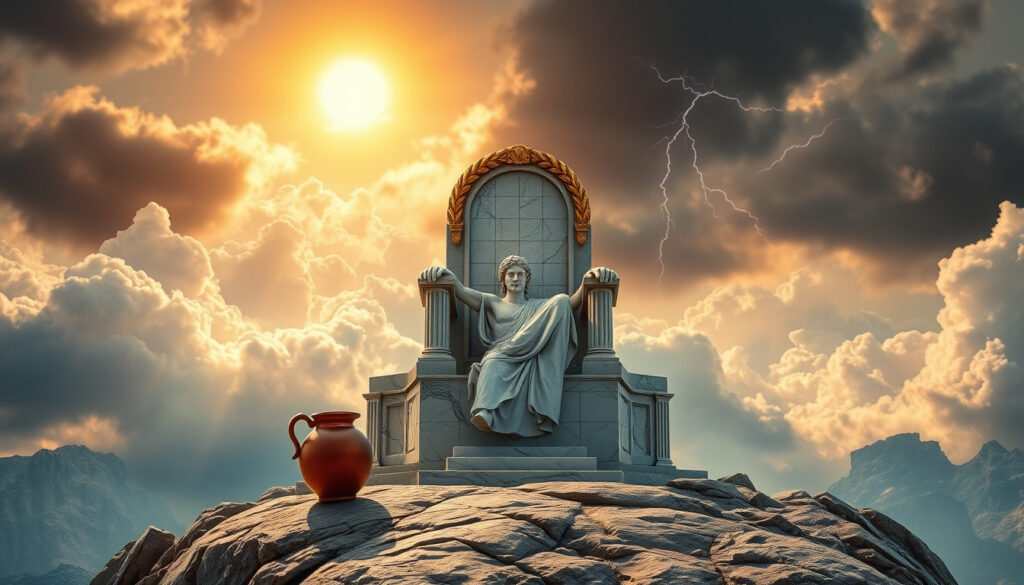
Greek Gods: Complete Guide to the Olympians, Powers, and Myths
If you’ve ever tried to recall the full lineup of Greek gods beyond Zeus and Athena, you’re not alone. The ancient Greek pantheon includes over 300 named deities, but the core group—the Twelve Olympians—remains the most recognized, as documented by Encyclopaedia Britannica (authoritative reference on Greek mythology).
Number of Olympian gods: 12 ·
Main pantheon: Olympians ·
King of the gods: Zeus ·
Goddess born from Zeus’s head: Athena ·
Number of known Greek deities (approximate): over 300
Quick snapshot
- The twelve Olympians are Zeus, Hera, Poseidon, Demeter, Athena, Apollo, Artemis, Ares, Aphrodite, Hephaestus, Hermes, and Dionysus (or Hestia) (Encyclopaedia Britannica).
- Zeus is the supreme ruler of the gods (World History Encyclopedia).
- Athena was born from Zeus’s head after he swallowed Metis (Theoi Greek Mythology).
- Whether Hestia or Dionysus is the 12th Olympian varies among ancient sources (Encyclopaedia Britannica).
- The exact number of all Greek gods is indeterminate; estimates range from dozens to hundreds (Wikipedia).
- The Olympian pantheon is divided into first-generation gods (descended from Cronus and Rhea) and later offspring of Zeus (Wikipedia).
- Hades is often excluded from the twelve because he rules the Underworld (Encyclopaedia Britannica).
- Modern scholarship continues to study and reinterpret the roles of the Greek gods (Encyclopaedia Britannica).
- Greek mythology tourism and popular culture keep the gods relevant today (Greek Mythology Tours).
Five key facts, one pattern: the Olympian framework is remarkably consistent despite minor variations in membership.
| Fact | Answer |
|---|---|
| Number of Olympian gods | 12 |
| King of the gods | Zeus |
| Goddess born from Zeus’s head | Athena |
| God of the Underworld | Hades |
| Goddess of love | Aphrodite |
Who are the 12 main Greek gods?
The Olympian Council
- The standard list includes Zeus, Hera, Poseidon, Demeter, Athena, Apollo, Artemis, Ares, Aphrodite, Hephaestus, Hermes, and Dionysus (Encyclopaedia Britannica (Greek mythology reference)).
- Some lists substitute Hestia for Dionysus (Encyclopaedia Britannica).
- Hades is not included because he lives in the Underworld (Encyclopaedia Britannica).
These twelve deities form the core of ancient Greek religion, each ruling a specific domain—Zeus over the sky, Poseidon over the sea, Hera over marriage, and so on. The council resided on Mount Olympus, giving them their name, as noted by Theoi Greek Mythology (dedicated reference site).
Individual profiles of each god
- Zeus: king of the gods, thunderbolt, sky
- Hera: queen of the gods, marriage, family
- Poseidon: god of the sea, earthquakes, storms
- Demeter: goddess of harvest, agriculture, fertility
- Athena: goddess of wisdom, strategic warfare, crafts
- Apollo: god of music, prophecy, healing, archery
- Artemis: goddess of the hunt, wilderness, moon
- Ares: god of war, violence, bloodshed
- Aphrodite: goddess of love, beauty, desire
- Hephaestus: god of fire, forge, craftsmanship
- Hermes: messenger god, travel, commerce, thieves
- Dionysus (or Hestia): god of wine, ecstasy, or goddess of hearth
These domains are documented by World History Encyclopedia (educational resource) and Theoi Greek Mythology. The Olympian council was not a fixed body; ancient sources sometimes included Hestia as the twelfth, reflecting the religious practices of individual city-states (Encyclopaedia Britannica).
The implication: The Olympian canon was flexible in antiquity, and modern lists are a consensus rather than a fixed roster. The choice of Hestia or Dionysus mattered to worshippers but doesn’t change the core pantheon.
Who is the most powerful Greek god?
Zeus as the supreme ruler
- Zeus is widely considered the most powerful, wielding the thunderbolt and ruling over gods and mortals (World History Encyclopedia).
- He is the father of many Olympians and maintains order among the gods (Encyclopaedia Britannica).
In the Iliad, Zeus is described as far stronger than all other gods combined, a claim echoed by Theoi Greek Mythology. No other god challenges his authority for long.
Other contenders for power (Poseidon, Hades, Athena)
- Poseidon and Hades are sometimes portrayed as rivals in might, but Zeus maintains authority (Encyclopaedia Britannica).
- Athena was honored in many major cities and held strategic wisdom and battle prowess (World History Encyclopedia).
While Poseidon can shake the earth and Hades commands the dead, Zeus’s thunderbolt and his role as the enforcer of divine law keep him supreme. The trade-off: raw power alone doesn’t guarantee influence—Athena’s wisdom made her a favorite of heroes and city-states alike.
Zeus’s supremacy isn’t just mythology—it reflects the ancient Greek need for a unifying authority figure, a king of gods who could mediate between mortal and divine realms. Without Zeus, the pantheon would lack the cosmic order that made Greek religion coherent.
The pattern: Zeus’s dominance is consistently affirmed across ancient texts, reinforcing his central role in the Olympian hierarchy.
Who is Zeus’ only male lover?
The story of Ganymede
- Zeus’ only male lover was Ganymede, a Trojan prince whom Zeus abducted in the form of an eagle (Theoi Greek Mythology (classical myth database)).
- Ganymede became the cupbearer of the gods on Mount Olympus (Theoi Greek Mythology).
This myth is recorded in Homer’s Iliad and later in Ovid’s Metamorphoses, as noted by Wikipedia (general reference). The abduction symbolises the elevation of a mortal to divine status.
Zeus’s other loves and the uniqueness of Ganymede
- Zeus had many lovers, both male and female, but Ganymede is the only male explicitly named as a lover in surviving ancient texts (Theoi Greek Mythology).
- Other figures like Tithonus were loved by Eos, not Zeus (Encyclopaedia Britannica).
The catch: Ganymede’s story is unique in the Greek mythological canon, making Zeus’s male lover a notable exception rather than a pattern.
Who was pregnant with Athena?
Metis and the prophecy
- Athena’s mother was Metis, a Titaness of wisdom and craft (Theoi Greek Mythology (Titaness Metis)).
- Zeus swallowed Metis after a prophecy that a son would overthrow him (Theoi Greek Mythology).
Metis was pregnant with Athena at the time, and Zeus absorbed her wisdom. The myth is recounted in Hesiod’s Theogony, as cited by Encyclopaedia Britannica.
Athena’s birth from Zeus’s head
- Athena was later born fully grown and armed from Zeus’s forehead (Theoi Greek Mythology).
- The birth was assisted by Hephaestus, who split Zeus’s head with an axe (World History Encyclopedia).
The implication: Athena’s unique birth—without a mother in the conventional sense—emphasises her role as a goddess of wisdom born from the mind of Zeus.
How Many Greek Gods Are There? (15, 50, 200)
The twelve Olympians vs. larger pantheons
- The standard count is 12 Olympians, but many lists vary by including or excluding Hestia/Dionysus (Encyclopaedia Britannica).
- Ancient sources mention numerous minor gods, river gods, nymphs, and spirits; Hesiod’s Theogony lists hundreds (Wikipedia).
- Mythopedia notes that there were actually thirteen gods counted among the Twelve Olympians in antiquity (Mythopedia (mythology reference)).
The 15-god count often includes Hades or other minor Olympians; the 50-god figure typically refers to the Nereids (sea nymphs), as explained by Theoi Greek Mythology. The 200 estimate includes all named deities in Greek mythology, from major gods to obscure river spirits.
The category of 50 Nereids
- The Nereids are fifty sea nymphs, daughters of Nereus, often considered minor goddesses (Theoi Greek Mythology).
- They include well-known names like Thetis, mother of Achilles (Encyclopaedia Britannica).
The concept of 200 deities comes from modern compilations of all named figures in Greek myth, including Titans, nymphs, and heroes-turned-gods. The pattern: the Greek pantheon is expansive, with a clear hierarchy from the Olympians down to the most minor spirits.
Trying to pin down an exact number of Greek gods is like counting the stars—the pantheon is a living, evolving tradition. Ancient Greeks themselves didn’t agree on a fixed roster, and modern lists reflect scholarly interpretation rather than dogmatic fact.
What this means: The Greek pantheon’s fluid membership reflects the diverse traditions of ancient Greek city-states, making any single list an approximation.
Confirmed Facts vs. What’s Unclear
Confirmed facts
- The 12 Olympians are the central gods in Greek religion (Encyclopaedia Britannica).
- Zeus is the supreme ruler (World History Encyclopedia).
- Athena was born from Zeus’s head after he swallowed Metis (Theoi Greek Mythology).
- Ganymede was Zeus’ male lover (Theoi Greek Mythology).
What’s unclear
- Whether Hestia or Dionysus is the 12th Olympian varies among ancient sources (Encyclopaedia Britannica).
- The exact number of all Greek gods is indeterminate; estimates range from dozens to hundreds (Wikipedia).
The implication: The Olympian canon is best understood as a flexible framework rather than a rigid list.
Quotes from Ancient Sources
“From his own head he brought forth bright-eyed Tritogeneia [Athena]…”
— Hesiod, Theogony, as cited by Theoi Greek Mythology
“Ganymede, the most beautiful of mortals, was taken by the gods to be Zeus’ cupbearer.”
— Homer, Iliad, as referenced by Theoi Greek Mythology
“The Twelve Olympians were the principal deities of the Greek pantheon, residing on Mount Olympus.”
— Encyclopaedia Britannica (Greek mythology entry)
For the modern reader, the Greek gods remain a cultural touchstone—from movies to video games. The consequence is clear: the pantheon continues to evolve in popular imagination, but the core Olympian council stands as the foundation. For anyone studying mythology, the choice is between memorising the standard twelve or embracing the full, messy reality of a pantheon that never fit neatly into a list.
simple.wikipedia.org, youtube.com, greekgodsandgoddesses.net, greekmythology.com, reddit.com, greektriplanner.me
For a more in-depth look at each deity’s powers and myths, you can refer to this detailed guide to the Olympians that expands on the core pantheon.
Frequently asked questions
What are the symbols of the Greek gods?
Each god has distinctive symbols: Zeus’s thunderbolt, Poseidon’s trident, Athena’s owl, Hera’s peacock, Apollo’s lyre, Artemis’s bow, Ares’s spear, Aphrodite’s dove, Hephaestus’s anvil, Hermes’s caduceus, Demeter’s sheaf of wheat, and Dionysus’s vine. World History Encyclopedia provides a full list.
Who are the Titans in Greek mythology?
The Titans were the elder gods, children of Gaia and Uranus, who ruled before the Olympians. They were overthrown in the Titanomachy led by Zeus. Key Titans include Cronus, Rhea, Oceanus, and Hyperion. Encyclopaedia Britannica details the Titanomachy.
What is the difference between Olympians and gods?
All Olympians are gods, but not all gods are Olympians. “Olympian” specifically refers to the twelve major deities who lived on Mount Olympus. Other gods, like Hades, were considered important but not Olympian because they did not reside on Olympus. Encyclopaedia Britannica explains the distinction.
How were the Greek gods worshipped in ancient times?
Worship involved temples, altars, animal sacrifices, festivals, and prayers. Each city-state had a patron god; for example, Athens honoured Athena. The World History Encyclopedia describes sacrificial practices and panhellenic festivals like the Olympic Games.
Are Greek gods immortal?
Yes, the Greek gods are immortal in the sense that they cannot die naturally. However, they can be wounded, imprisoned, or overthrown. Zeus’s power kept him safe from rebellion. Theoi Greek Mythology notes that the gods eat ambrosia and drink nectar to maintain their immortality.
What is Hades’ role in the pantheon?
Hades is the god of the Underworld and the dead, ruling over the realm of the same name. He is not considered an Olympian because he rarely leaves his domain. His wealth came from the precious metals of the earth. Encyclopaedia Britannica describes Hades as a significant but distant figure.
Who is the goddess of wisdom and why is she important?
Athena is the goddess of wisdom, strategic warfare, and crafts. She was born from Zeus’s head and was the patron deity of Athens. She guided heroes like Odysseus and Perseus. World History Encyclopedia highlights her role as a protector of cities.
More related posts
 Paul McCartney: Life, Music, and Relationships Guide
 Max Holmes: Biography, Stats, and 2025 Injury Update
 Kung Fu vs Karate: Differences, History & Difficulty
 777 Angel Number Meaning: Spiritual Signs & Guidance
 Sydney FC Games – Fixtures Tickets Schedule 2025/26
 Taz Skylar: Ethnicity, Languages, Relationship, and Biography
 Pol Pot: Verified Facts, Sources, and Unanswered Questions
 Pearl Jam: Meaning, Biggest Hits, Cobain Feud & 2026 Tour