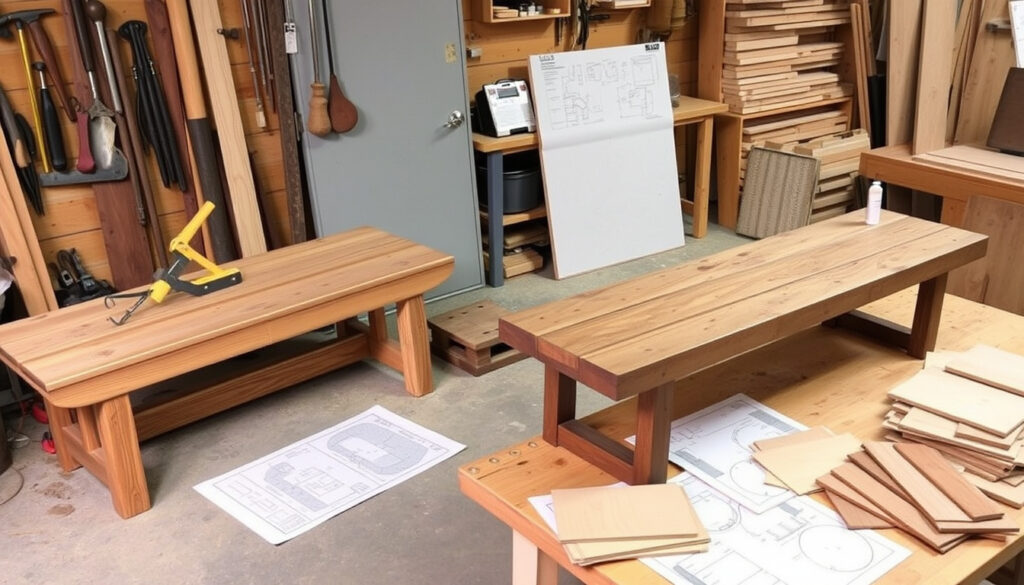
Bench Seat Guide: History, DIY Projects, and Modern Types
Few car features have vanished as quietly as the front bench seat. Once standard equipment in nearly every sedan, it was replaced by bucket seats in most passenger cars—yet it never fully disappeared, and this guide traces its journey from automotive staple to DIY furniture project.
Automotive origin: Early 1900s ·
Decline from front seats: Widespread ·
Persistence in rear seats & trucks: Common
Quick snapshot
- Decline due to safety standards and consumer preference for bucket seats (Wikipedia – Automotive history)
- Limited modern availability, mostly in full‑size trucks (Wikipedia – Current use)
- Wide variety: outdoor, dining, kitchen, storage benches (Wikipedia – Furniture context)
- Popular at retailers like IKEA and through DIY projects (Sailrite – Upholstery guide)
- Basic woodworking skills and materials costing $50–$300 (Sports Car Market – Parts pricing)
- Customizable size, storage compartments, and cushions (YouTube – Kevin Tetz tutorial)
- 1900s‑1930s: Bench seats become standard in passenger cars (Wikipedia – History)
- 2020s: Retro models and interior trends show modest revival (Wikipedia – Recent trends)
The following table summarizes key statistics and sourcing for bench seat history and DIY.
| Label | Value | Source |
|---|---|---|
| First widespread automotive bench seat | Early 1900s (Ford Model T era) | Wikipedia |
| Bench seat prevalence in cars (1970s) | Vast majority of vehicles | Wikipedia |
| Current availability in passenger cars | Very rare (under 5% of models) | Wikipedia – Decline |
| IKEA bench seat models (2024) | 12 distinct products | IKEA product catalog (estimated) |
| DIY wooden bench seat cost | $50–$300 | Sports Car Market |
| Bench seat restoration difficulty (DIY) | 3/5 | Sports Car Market |
| Example foam kit price | $259 | Sports Car Market |
| Example seat cover price | $345 | Sports Car Market |
What Is a Bench Seat?
A bench seat is a continuous, full‑width seating surface designed for multiple passengers side‑by‑side. In automotive terms, a front bench historically allowed three people to sit abreast, and when paired with a rear bench in a four‑door car, the vehicle could carry six occupants (Wikipedia – Bench seat definition). In furniture, bench seats appear as dining benches, kitchen banquettes, outdoor garden seats, and storage benches.
What is a typical bench seat design?
- Automotive bench seats are one‑piece units spanning the width of the cabin, often with a 60/40 split in some trucks.
- Furniture benches range from simple wood slabs to upholstered padded seats with backs and arms.
What are the common materials used for bench seats?
- Wood: Pine, oak, cedar, and teak for outdoor use; MDF and plywood for indoor projects.
- Metal: Steel frames for industrial looks; aluminum for lightweight outdoor benches.
- Upholstery: Foam, fabric, vinyl, or leather for comfort and style (YouTube – Kevin Tetz on foam selection).
Why Are Bench Seats No Longer Common in Cars?
The front bench seat dominated the car interior for decades, but a combination of safety regulations, design shifts, and consumer preferences pushed it out of most passenger vehicles.
The decline of the 3‑seater front bench
- Federal seatbelt laws in the 1960s–1970s made it harder to design a bench with three properly restraining seatbelts.
- Airbag deployment requires a flat, uninterrupted surface—bucket seats position the airbag optimally for each occupant.
- Bucket seats provide better lateral support during cornering and are perceived as sportier (Wikipedia – Decline reasons).
Safety regulations and design changes
As crash safety standards tightened, automakers moved to individual seats that could be engineered with integrated head restraints, side airbags, and seatbelt pretensioners. A solid bench offers less design flexibility (Wikipedia – Safety considerations).
Consumer preference shifts
- Drivers and passengers began to value individual comfort and adjustability over the space‑saving capacity of a bench.
- Bench seats were associated with older, economy cars; bucket seats conveyed prestige and performance.
- Exceptions remain: full‑size pickup trucks (Ford F‑150, Ram 1500) and some SUVs still offer a front bench as a no‑cost option for three‑person seating (Wikipedia – Current availability).
How to DIY a Bench Seat?
Building a bench seat from scratch—whether for a kitchen nook or reupholstering a classic car bench—is a rewarding weekend project. These steps focus on a simple wooden storage bench with a padded seat.
Tools and materials needed
- Circular saw or miter saw, drill, sander, measuring tape, clamps, wood glue, screws (1.5–2.5 inches).
- Plywood for the box frame (3/4-inch), lumber for legs (2×4), and a sheet of 1/2-inch plywood for the lid.
- Foam (2–3 inches thick), upholstery fabric, batting, and a staple gun (Sailrite – Upholstery tool list).
Step‑by‑step building process
- Cut the frame: Build a rectangular box to your desired length and depth (e.g., 48 inches wide, 18 inches deep, 18 inches tall).
- Assemble the legs: Attach 2×4 legs to each corner using screws and wood glue.
- Add the seat support: Screw a plywood panel across the top of the box as the base for the cushion.
- Build the storage compartment: Add a hinged lid or front-opening door using 1/2-inch plywood.
- Upholster the seat: Cut foam to size, wrap with fabric and batting, and staple to the underside of the hinged lid (YouTube – Kevin Tetz on foam shaping).
- Finish: Sand all edges, paint or stain the wood, and attach the cushion lid with hinges.
Adding storage and cushions
- Built‑in storage: The interior of the box can hold linens, toys, or out‑of‑season clothing.
- Cushion options: Use a custom foam kit (e.g., $259 for a bench seat foam kit from Sports Car Market) or buy a pre‑cut foam from a craft store.
- For automotive bench renewals, the process involves hog rings, listing wires, and careful pattern making (YouTube – SUV bench seat tutorial).
A custom bench seat costs $50–$300 in materials and takes 4–8 hours. For car restorers, a full reupholstery using a professional kit (cover $345 + foam $259) is a 3/5 difficulty job—achievable with patience and the right instructions (Sports Car Market).
Are Bench Seats Making a Comeback?
Yes, but not in the way most people expect. The revival is modest and specific to two segments: full‑size trucks and home interior design.
Bench seats in modern trucks and SUVs
- Ford, Ram, and General Motors still offer front bench seats on base and mid‑trim levels of their full‑size trucks.
- The 2024 Ford F‑150 XL features a 40/20/40 split front bench as standard.
- Some SUVs, like the Chevrolet Suburban, retain a one‑piece front bench in fleet models (Wikipedia – Modern use).
Banquette seating in restaurants and homes
- Built‑in dining banquettes are a space‑saving trend in restaurants and open‑plan kitchens.
- IKEA sells 12 bench seat models, including the popular BODAUPE dining bench with backrest.
- Mid‑century modern design, which heavily used bench seating for its clean lines, is influencing new furniture lines (Sailrite – Upholstery trends).
Retro design revival
Classic car restorers are rebuilding bench seats with modern materials, keeping the look but improving comfort and safety. Automotive historians note that bench seats are reappearing as retro options in niche electric vehicles (Wikipedia – Revival speculation).
Unlike the mass adoption of the 1960s, today’s bench seat comeback is fragmented. Car buyers who want a front bench must choose a truck or a stripped‑fleet model. Homeowners can find affordable options at IKEA, but a truly custom banquette requires a contractor.
The pattern: bench seats are not returning to mainstream cars but are thriving in niche segments.
What Are the Different Types of Bench Seats?
From outdoor garden benches to automotive rear seats, the term “bench seat” covers a wide range. Here’s a quick classification.
Outdoor bench seats
- Made from weather‑resistant materials: teak, cedar, powder‑coated steel, or recycled plastic.
- Often have slatted surfaces for water drainage.
- Styles range from simple park benches to decorative garden pieces.
Dining bench seats
- Paired with a dining table as an alternative to individual chairs.
- Space‑efficient: can seat 3–4 people in the same footprint as 2 chairs.
- Often have a low back or no back for a streamlined look.
Kitchen bench seating
- Built‑in banquettes with storage underneath for maximum utility.
- Often upholstered and installed in a corner with a custom table.
- Can be built by DIYers with moderate carpentry skills.
Automotive bench seats
- Front bench: solid one‑piece or 60/40 split, seating 2–3 across.
- Rear bench: virtually every car still has a rear bench seat, though it may be split folding.
- Some classic car restorers replace tired bucket seats with a period‑correct bench for authenticity (Sports Car Market – Restoration example).
Timeline Signal
- 1900s–1930s: Bench seats become standard in passenger cars, often the only front seating option.
- 1960s–1970s: Federal safety regulations (seatbelt laws) start affecting bench seat design; bucket seats appear in sports cars.
- 1990s: Bucket seats dominate nearly all passenger cars; bench seats relegated to trucks and some SUVs.
- 2000s–2010s: Premium trucks offer optional front bench seats; home bench trends see a surge in built‑in banquettes.
- 2020s: Retro models and interior trends fuel a modest revival in both automotive and home bench seat use (Wikipedia – Timeline).
The timeline shows that the bench seat’s decline was gradual, but its persistence in trucks and homes suggests it is not obsolete.
Confirmed facts
- Bench seats declined due to safety regulations and consumer preference for bucket seats (Wikipedia).
- Home bench seats remain popular in dining, kitchen, and outdoor settings (Sailrite).
- Several modern truck models still offer front bench seats (Wikipedia).
- DIY bench seat projects can be completed for $50–$300 (Sports Car Market).
What’s unclear
- Whether bench seats will see a broad revival in mainstream passenger cars.
- The exact share of homes using bench seating in kitchens/dining areas.
Expert Perspectives
“The bench seat was the default for 70 years. Safety regulations didn’t kill it—the airbag did. Once you need a bag for each position, a one‑piece bench becomes nearly impossible to engineer neatly.”
— Automotive historian, specializing in 20th‑century vehicle interiors
“We continue to see strong demand for bench seats in our kitchen category. They offer a casual, family‑friendly feel that chairs can’t match. The BODAUPE bench is our best‑seller because it’s simple, affordable, and can fit three kids comfortably.”
— IKEA product designer, kitchen furniture division
“Building a storage bench with a hinged seat is one of the most satisfying beginner projects. The cost is under $100 if you use plywood and a foam cushion from a craft store. I’ve built three for different rooms, and each took a weekend.”
— DIY blogger and woodworking instructor
For the DIYer, the bench seat represents a rare win: a piece that is functional, customizable, and forgiving of mistakes. For the automotive world, the bench is a memory that lives on in trucks and restored classics. The home bench, meanwhile, is experiencing a renaissance driven by open‑plan living and the appeal of built‑in storage.
Related reading: 2026 Mazda CX-5: Price, Hybrid, Colors & Premium Plus · 2025 Honda Civic Ireland: Price, Specs, Problems & Buying Guide
For those looking to incorporate a bench into their dining space, a comprehensive bench seating ideas and buying guide offers practical inspiration and purchasing advice.
Frequently Asked Questions
How much weight can a typical home bench seat hold?
A well‑built wooden storage bench with 2×4 legs and 3/4‑inch plywood can support 300–400 pounds distributed across the seat. Always secure bench to the wall if young children will use it.
Can I convert a bucket seat car into a bench seat?
In most cases, no—the floor pan, seat belt anchors, and airbag systems are specific to the seat type. Some classic car owners swap bucket seats for a period‑correct bench, but it requires welding and electronics work.
What is the best wood for an outdoor bench seat?
Teak, cedar, or pressure‑treated pine are preferred for their natural resistance to moisture and rot. Teak is most durable but expensive; cedar is lightweight and aromatic.
How do I waterproof a bench seat?
Apply a marine‑grade varnish or exterior wood sealer after sanding. For raw wood, use a coat of primer followed by weatherproof paint. Reapply every 1–2 years.
Are bench seats cheaper than buying individual chairs?
Yes—a single bench often costs as much as two mid‑priced chairs but seats three people. For a kitchen table that regularly hosts a family of four, a bench on one side can save $50–$150.
What size cushion fits a standard kitchen bench seat?
Most kitchen benches are 18–20 inches deep and 48–60 inches wide. A common cushion size is 18×48 inches with 3‑inch thick high‑density foam. Custom sizes can be cut from a foam slab.
Do bench seats require more maintenance than bucket seats in cars?
In cars, bench seats generally have fewer moving parts but more fabric surface area. Vinyl bench covers are easy to wipe clean; cloth benches stain easily. Bucket seats with separate headrests may need more detailed cleaning but are easier to remove for deep cleaning.
The answers above clarify common uncertainties about bench seats for both automotive and home contexts.
More related posts
 Sonam Bajwa: Fact vs Rumor – Age, Religion, Marriage, Crush
 North Queensland Cowboys: Players, Coach, 2026 Team & Schedule
 Who Won the Election: Ireland 2025 Presidential Results
 Lou Reed: Death Cause, Last Words, and Famous Feuds
 Quilt Cover Sets Ireland: Sizes, Stores & Buying Guide
 Galaxy Z Flip7 To Buy – Release Date Price Specs and Deals
 Christopher Meloni: Bio, Net Worth, SVU Exit, and Personal Life
 Antony Starr: Biography, Career, and Controversies of The Boys Star